
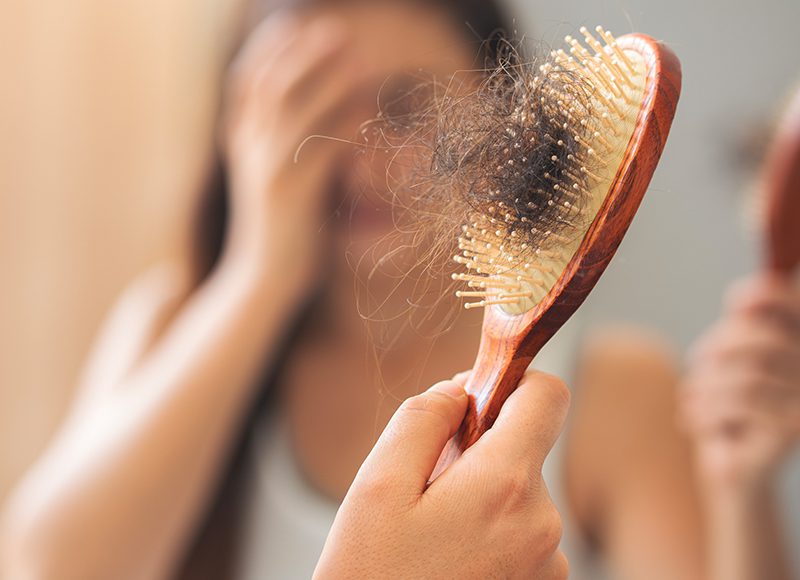
Do Weight-Loss Drugs Cause Hair Loss? Part 2 – GLP-1 and Hair Loss
The latest science behind GLP-1 medications, scalp shedding, possible mechanisms and recovery
Evidence review and consumer guide | Last reviewed: July 2026
What are GLP-1 weight-loss medications?
GLP-1 receptor agonists mimic or amplify the actions of glucagon-like peptide-1, an intestinal hormone involved in appetite, satiety, glucose regulation and gastric emptying. Tirzepatide activates both the GLP-1 and glucose-dependent insulinotropic polypeptide (GIP) receptors.
Medicines commonly discussed in relation to weight loss include:
- Wegovy® — semaglutide, licensed for chronic weight management.
- Ozempic® — semaglutide, primarily licensed for type 2 diabetes but widely associated with weight-loss use.
- Rybelsus® — oral semaglutide for type 2 diabetes.
- Mounjaro® — tirzepatide for type 2 diabetes.
- Zepbound® — tirzepatide for chronic weight management in relevant markets.
- Saxenda® — liraglutide for chronic weight management.
These medicines reduce appetite and energy intake, increase fullness and, depending on the drug, dose and individual response, can produce marked weight loss. That effectiveness is also central to the hair-loss question: the more rapidly the metabolic environment changes, the greater the potential disturbance to the hair cycle.
Do these medicines really cause hair loss?
The most accurate answer is that an association has now been observed, but causation and mechanism are not fully established. Hair loss has been reported in weight-management trials and post-marketing data, and a large 2026 observational study strengthened the signal by comparing GLP-1 receptor agonists with other diabetes medicines.
However, an association does not automatically mean the drug directly injures the follicle. People beginning GLP-1 therapy may simultaneously lose weight rapidly, eat less protein, develop or reveal nutritional deficiencies, experience illness or metabolic stress, and become more attentive to changes in appearance. Each of these can influence detection and risk.
Key takeaway: The evidence supports a real increase in diagnosed non-scarring alopecia in some populations, but it does not establish that GLP-1 medicines directly poison or permanently damage scalp follicles.
If you’re already noticing shedding, Section 14 covers what a cosmetic scalp serum like The Ultimate Hair & Scalp Serum can and can’t do while you get to the bottom of the cause.