
Do Weight-Loss Drugs Cause Hair Loss? Part 6 – Treatment
The latest science behind GLP-1 medications, scalp shedding, possible mechanisms and recovery
Evidence review and consumer guide | Last reviewed: July 2026
How to support hair while using GLP-1 medication
The aim is not to undermine effective medical treatment. For many patients, the benefits of GLP-1 therapy outweigh the inconvenience of temporary shedding. Management should focus on identifying modifiable contributors and allowing the hair cycle time to recover.
1. Discuss the rate of weight loss
Very rapid loss may increase physiological stress. Dose changes and treatment targets should be discussed with the prescriber rather than adjusted independently.
2. Protect nutritional adequacy
Prioritise nutrient-dense meals and adequate protein within the dietary plan recommended for the individual. Persistent nausea, vomiting or inability to eat should be reported to the treating clinician.
3. Investigate persistent or substantial shedding
Depending on the clinical picture, assessment may include a full blood count, ferritin and iron studies, thyroid function, vitamin B12, folate and other tests selected by a healthcare professional. Testing should be targeted rather than based on indiscriminate supplement marketing.
4. Avoid excessive supplementation
More is not always better. High doses of vitamin A, selenium and other nutrients can cause harm and may worsen hair loss. Biotin can interfere with certain laboratory tests and is not a universal treatment for shedding.
5. Treat co-existing scalp disease
Seborrhoeic dermatitis, psoriasis, inflammatory scalp disease and significant itching should be assessed and managed. These conditions may increase breakage, discomfort or perceived shedding even when they are not the primary cause.
6. Allow enough time
Because the telogen phase lasts for months, improvement is delayed. Shedding may continue after nutrition and weight have stabilised. Early regrowth may appear as short, tapered hairs, while meaningful density recovery can take six to twelve months or longer.
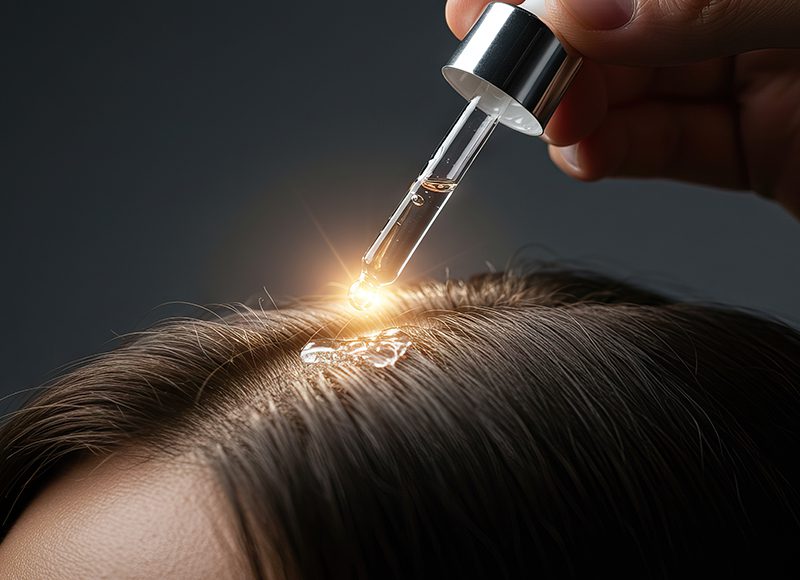
Alongside these steps, some people choose to support scalp condition and hair-fibre appearance with a cosmetic scalp serum during this recovery window — see Section 14 below for where this fits, and where it doesn’t.
When to seek medical assessment
Medical or dermatological assessment is advisable when there is:
- Patchy or sharply defined hair loss.
- Scalp pain, burning, marked redness, scaling, pustules or scarring.
- Loss of eyebrows, eyelashes or body hair.
- Rapidly progressive thinning or visible loss of follicular openings.
- Symptoms of anaemia, thyroid disease, nutritional deficiency or systemic illness.
- Shedding that remains severe for many months after weight stabilisation.
- A pattern suggesting co-existing androgenetic alopecia or alopecia areata.
Sudden patchy loss, broken hairs, scarring or inflammatory symptoms should not be assumed to be a routine side effect of weight loss.
Can cosmetic scalp serums help?
A cosmetic serum cannot correct an energy deficit, iron deficiency, thyroid disorder or prescription-drug adverse effect. It should not be presented as a treatment for a medical cause of alopecia.
A well-formulated cosmetic product may nevertheless support scalp condition, hair-fibre quality and the appearance of fuller, healthier hair during recovery. Ingredients should be selected transparently, claims should remain proportionate to the evidence, and the product should complement — not replace — nutritional and medical assessment.
For SkinCosmic, the strongest editorial position is not to imply that a serum “cures Ozempic hair loss.” The credible position is that topical cosmetic support can form one part of a broader hair-care strategy while the underlying trigger is identified and addressed.
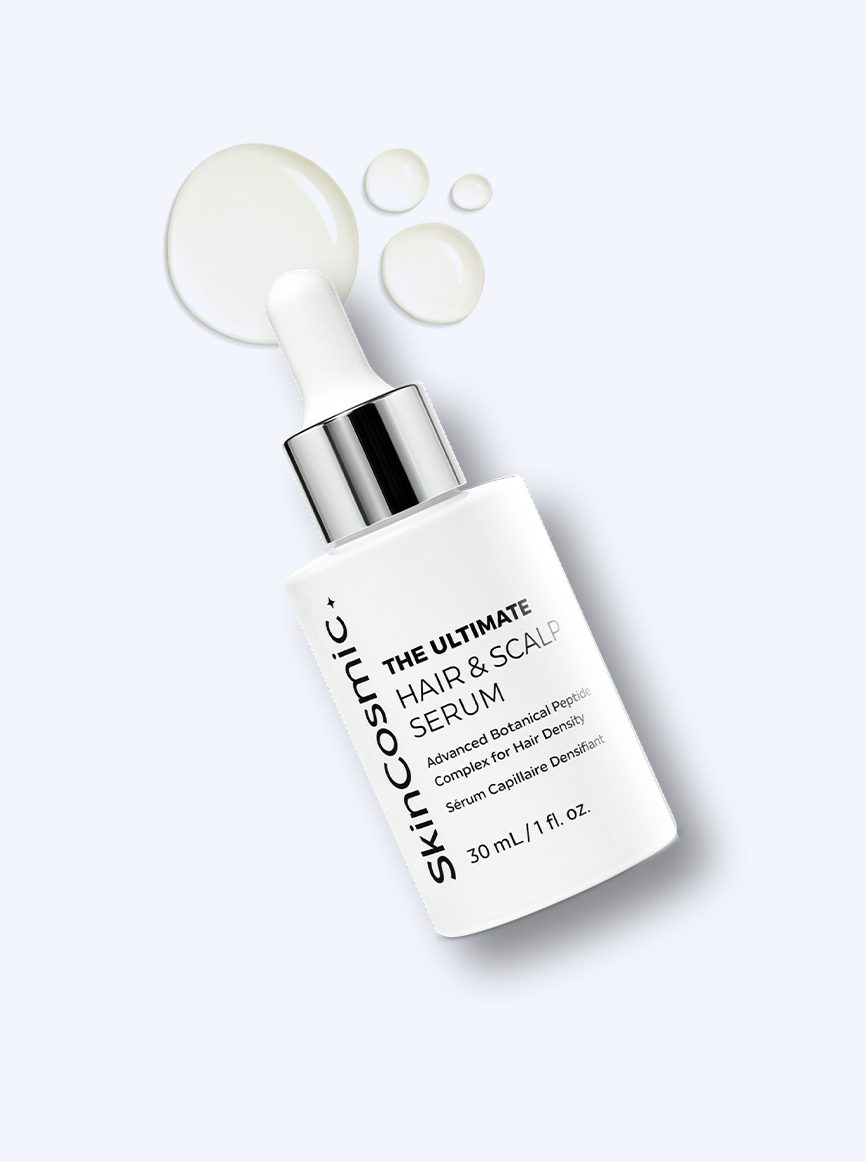
The Ultimate Hair & Scalp Serum
Formulated to support scalp condition and hair-fibre quality while your hair cycle recovers — not positioned as a treatment for GLP-1-related shedding or any medical cause of hair loss. Best used alongside, not instead of, addressing the underlying nutritional or metabolic trigger with your clinician.